For international students pursuing careers in science, technology, engineering, and mathematics (STEM) in the United States, Optional Practical Training (OPT) can be an important step toward gaining professional experience. After completing an eligible degree, students may qualify for post-completion OPT and, if they meet the requirements, a 24-month STEM OPT extension.
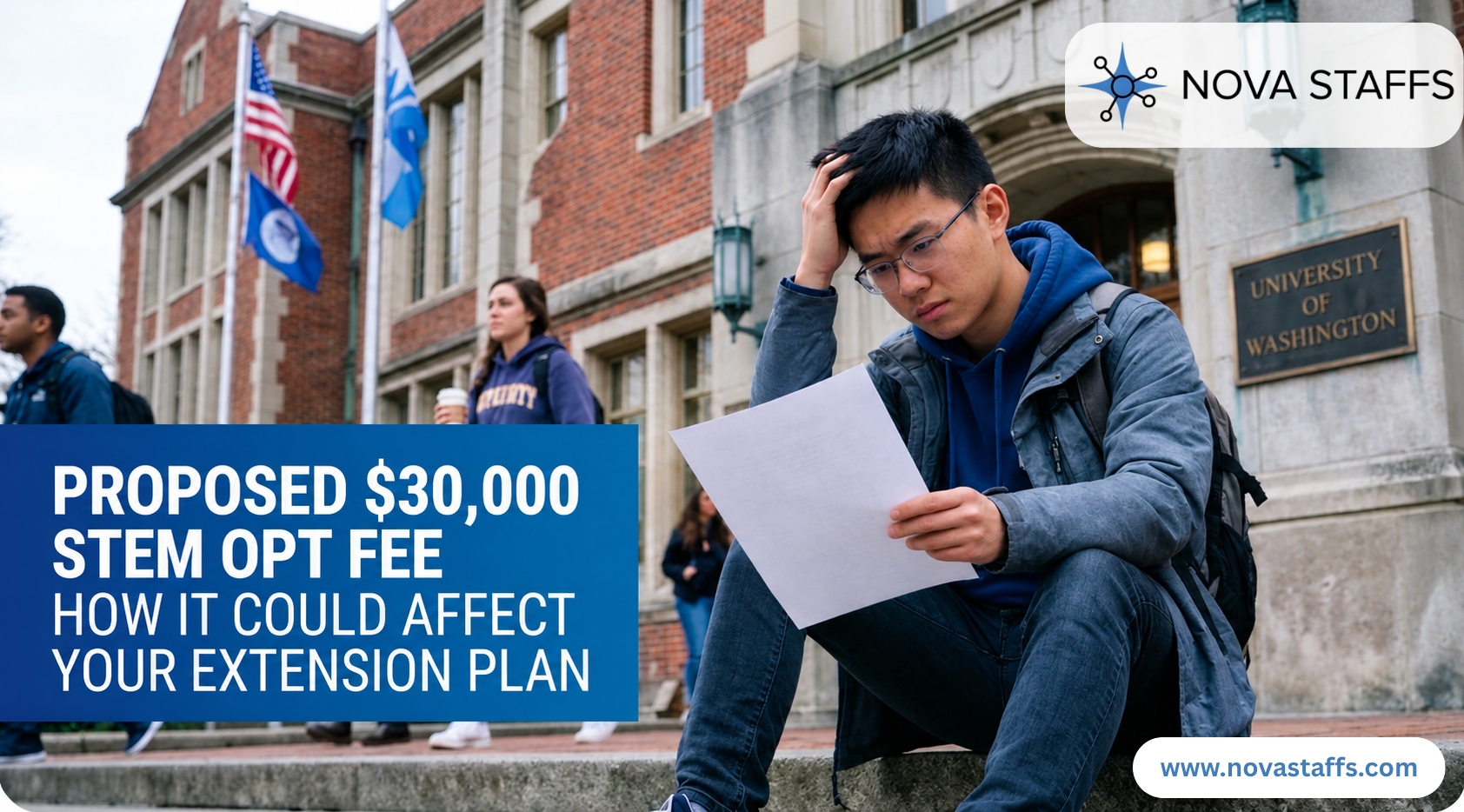
However, a proposed change to OPT fees could affect how students, universities, and employers plan for future employment authorization. The proposed $30,000 STEM OPT fee has attracted attention because of its potential financial impact on institutions and the wider international student employment process.
As of October 29, 2026, the Department of Homeland Security (DHS) has proposed new fees for OPT participation. The proposal includes a $70,000 fee for an initial OPT recommendation and a $30,000 fee for a subsequent OPT recommendation, which may include a STEM OPT extension. These are proposed institutional fees, not a confirmed requirement for every student to pay $30,000 directly.
For F-1 students planning their next career move, understanding the proposal and preparing early can help reduce uncertainty. This guide explains what the proposed STEM OPT Fee could mean, which factors to consider, and how to approach your extension plan.
The proposed fee is part of a DHS rulemaking initiative concerning Optional Practical Training. The proposal, published in the Federal Register on October 8, 2026, aims to strengthen oversight of OPT, address alleged program misuse, and protect U.S. workers.
Under the proposal, a Student and Exchange Visitor Program (SEVP)-certified school would pay a $70,000 fee when recommending a student for OPT for the first time. A subsequent OPT recommendation for a student who has previously participated in OPT and for whom the initial fee has been paid would carry a proposed $30,000 fee.
This subsequent fee could apply to a STEM OPT extension. The proposed obligation would be associated with the school's OPT recommendation rather than automatically being triggered by a student changing employers.
The proposal is still subject to the rulemaking process. Students should therefore distinguish between a proposed policy and an effective, final requirement before making decisions about their immigration status or employment plans.
The potential effects extend beyond students alone. Universities, international student offices, and employers may also need to consider the proposal when planning future hiring and employment authorization.
Students currently working under post-completion OPT may be concerned about whether the proposed fee could affect their eligibility for a STEM OPT extension.
The proposal could influence how some institutions evaluate and process OPT recommendations if finalized. Students should not assume that their extension will automatically be denied or that they must personally pay the proposed fee. Instead, they should ask their Designated School Official (DSO) how the institution is interpreting the proposal and monitor official updates.
Universities could face significant financial and administrative considerations if the proposal becomes final. Institutions may need to review their budgets, OPT procedures, and approach to recommending eligible students.
Students should maintain communication with their international student office because institutional guidance will be important for understanding any changes to the recommendation process.
Employers may also need to review their hiring plans for international STEM graduates. If the proposed fees affect institutional willingness or ability to recommend students for OPT, employers could face additional uncertainty when planning recruitment and onboarding.
Companies hiring international candidates should avoid making assumptions about who will bear the cost. The proposal does not prescribe a single mandatory arrangement for how schools must source the funds, and any cost-sharing or reimbursement arrangement would require careful review.
Understanding the possible effects early can help you prepare a more realistic employment and extension timeline.
Start by checking your Employment Authorization Document (EAD), current OPT authorization dates, and anticipated STEM OPT eligibility.
If you are approaching the end of your initial OPT period, speak with your DSO about the application timeline and documentation required for a STEM OPT extension. Do not delay preparation while waiting for news about the proposed fee.
Your personal timeline and applicable rules remain important regardless of whether the proposal changes.
Not every international student qualifies for a STEM OPT extension. Generally, applicants must meet requirements involving an eligible STEM degree, an eligible employer, and a qualifying training arrangement.
Review whether your degree qualifies, whether your employer meets the applicable requirements, and whether your training plan can be completed correctly.
You should also confirm that your employer participates in E-Verify and that the required Form I-983 training plan is prepared in accordance with current rules.
The proposed $30,000 STEM OPT Fee could create questions about institutional budgets and administrative policies. However, it should not be treated as a confirmed personal bill.
Ask your university whether it has issued guidance on the proposal, whether its OPT recommendation procedures may change, and how it will communicate any final requirements.
Avoid making major financial or career decisions based solely on social media posts or unofficial claims about the fee.
If you are working on initial OPT and expect to apply for a STEM OPT extension, discuss your anticipated timeline with your employer.
Confirm that the company understands its responsibilities under the STEM OPT program, including the training plan, reporting obligations, and employment eligibility requirements.
You can also ask whether the company has an internal policy for responding to changes in immigration-related costs. Any proposed payment arrangement should be confirmed in writing and reviewed for legal compliance.
A well-organized application process can help prevent avoidable delays. Depending on your situation, you may need to prepare documents such as:
Check the current USCIS instructions and your university's guidance before submitting an application. Do not rely on an old checklist if official requirements have changed.
Potentially, but the outcome is uncertain.
If the proposed fee becomes final and institutions respond by limiting the number of OPT recommendations they make, some students could encounter additional difficulties accessing practical training opportunities. Employers might also reconsider recruitment plans where administrative or financial uncertainty increases.
However, the actual effect would depend on the final rule, institutional decisions, employer practices, and how the policy is implemented. It would be inaccurate to conclude that STEM graduates will lose access to jobs or that every employer will stop hiring international students.
Students can continue strengthening their career prospects by developing relevant technical skills, building project experience, improving their resumes, and applying to suitable employers early.
At NovaStaffs, we recognize that international job seekers need clear information and practical career preparation when navigating a changing employment landscape. Staying informed and preparing for interviews and recruitment opportunities can help students make better decisions while monitoring policy developments.
Rather than reacting to unconfirmed information, create a plan based on your current status and career goals.
First, check official announcements. Follow DHS, the Student and Exchange Visitor Program, and USCIS for updates about the proposed OPT fee and any final rule.
Second, contact your DSO. Ask about your eligibility, application timeline, and whether your school has shared guidance on the proposal.
Third, keep your documents ready. Review your degree eligibility, training plan, employer information, and application requirements well before your current authorization expires.
Fourth, maintain communication with your employer. Confirm your expected extension timeline and ensure that the company understands the requirements for employing STEM OPT participants.
Finally, avoid premature decisions. Do not abandon a qualifying job opportunity, pay an unverified fee, or make an immigration decision based solely on headlines about a proposed rule. If your situation involves complicated immigration questions, consult a qualified immigration attorney.
The proposal's next steps depend on the federal rulemaking process. DHS has invited public comments on the proposed rule, with the main comment deadline listed as November 9, 2026. A final rule could differ from the proposal, and its effective date and transition provisions would need to be reviewed if it is finalized.
Students should pay attention to the final language rather than assuming that the proposed amounts, payment responsibilities, or timing will remain unchanged.
The most useful approach is to prepare for your STEM OPT extension under the rules currently applicable to you while remaining aware of possible changes. This allows you to continue planning your education-to-employment transition without treating an unfinalized proposal as settled law.
The proposed STEM OPT Fee of $30,000 raises important questions for international students, universities, and employers planning future OPT participation. If adopted, it could influence institutional decisions and create additional uncertainty around STEM OPT extension planning.
Nevertheless, the proposal is not the same as a final rule, and the proposed fee should not automatically be interpreted as a $30,000 payment that every student must make.
Review your eligibility, communicate with your DSO and employer, prepare your documents early, and follow official announcements. With accurate information and a well-organized plan, you can make more informed decisions about your professional future.
NovaStaffs encourages international job seekers to stay informed, build relevant skills, and approach career planning with confidence while immigration policies continue to evolve.
As of October 29, 2026, the $30,000 fee is part of a proposed DHS rule published on October 8, 2026. It should not be described as an already implemented fee. Check official announcements for any final rule or effective date.
Not necessarily. Under the proposal, the fee would be paid by an SEVP-certified school for a subsequent OPT recommendation when the specified conditions are met. It is not automatically a personal $30,000 payment required from every STEM OPT student.
It could affect institutional decisions and processing procedures if finalized. However, the impact on an individual student would depend on the final rule, the student's circumstances, and the institution's response. Contact your DSO for guidance.
Do not delay an application simply because of an unfinalized proposal. Check your eligibility and current filing timeline with your DSO, and follow the applicable USCIS instructions.
Common requirements include a qualifying STEM degree, employer and E-Verify information, Form I-983, a DSO recommendation, and Form I-765. Additional requirements may apply depending on your circumstances, so verify the current official checklist.
Join thousands of successful professionals who found their dream
jobs with Nova Staffs.